Garlic in Chinese Cooking: A 2,000-Year Journey from Ancient Trade to Everyday Flavor
Few ingredients are as ordinary—and as powerful—in the Chinese kitchen as garlic. A few raw slices can sharpen a dipping sauce, minced garlic can perfume hot oil, and a generous layer of garlic sauce can turn prawns, oysters, or eggplant into an intensely aromatic dish. Today, garlic is so deeply embedded in Chinese cooking that it feels native to the cuisine, yet its history also reflects centuries of migration, agricultural development, regional adaptation, and changing cooking technology.
From the Western Regions to the Chinese Table
Garlic is generally believed to have originated in Central Asia. The large-bulbed garlic familiar today was historically called húsuàn (胡蒜), meaning “foreign garlic,” to distinguish it from smaller native alliums already eaten in China. Chinese tradition credits the diplomat and explorer Zhang Qian with bringing it back from the Western Regions during the Western Han dynasty, more than 2,000 years ago. Because the surviving historical evidence is not completely conclusive, this is best understood as the traditional account of garlic’s introduction rather than a precisely documented event. Modern scholarship nevertheless places garlic’s centre of origin in Central Asia and confirms its ancient spread through trade and cultural exchange.
By later imperial periods, garlic was no longer treated simply as a foreign novelty. Historical studies of Chinese agriculture identify garlic among the vegetables commonly cultivated and consumed in China, alongside onions, chives, shallots, turnips, aubergines, and other everyday crops.
Garlic also crossed the boundary between food and medicine. Traditional Chinese dietary thought often viewed ingredients not only by flavor but also by their perceived effects on the body. Historical medical traditions described garlic as warming and stimulating, and it appeared in preparations intended to address digestive complaints and other illnesses. These historical uses should not be treated as modern medical advice, but they demonstrate that garlic was valued as more than a seasoning.
Why Crushing Garlic Changes Its Flavor
Garlic’s importance in cooking comes partly from a chemical transformation that begins when a clove is chopped, crushed, or minced. Damage to the garlic’s cells allows the enzyme alliinase to convert alliin into allicin, a highly reactive sulfur compound associated with the characteristic aroma of freshly crushed garlic.
This helps explain why Chinese recipes treat garlic differently depending on the desired effect. Whole cloves cooked slowly become mild and slightly sweet. Thin slices briefly fried in oil produce a gentler aroma. Finely minced or crushed garlic releases a more immediate and assertive fragrance.
Heat changes that fragrance again. Raw garlic is sharp and almost spicy, while garlic gently cooked in oil becomes rounder, richer, and less aggressive. If it is fried too long, however, the small pieces can quickly burn and become bitter. Controlling the size of the garlic, the heat of the oil, and the cooking time is therefore an important practical skill in Chinese cooking.
Garlic as a Foundation, Not Just a Garnish
In many Chinese dishes, garlic is added near the beginning of cooking together with ginger, green onion, or chili. It perfumes the oil before the main ingredients enter the wok. In other dishes, however, garlic becomes the central flavor rather than part of the background.
A clear example is Garlic Sauce, or suànróng jiàng (蒜蓉酱). The term does not refer to one universally fixed formula. It usually describes a preparation built around finely minced garlic cooked with oil and seasonings. Depending on the cook and the dish, it may also contain salt, soy sauce, oyster sauce, sugar, chili, or green onion.
Its value lies in versatility. One batch can be spooned over seafood, spread across vegetables, mixed into noodles, or used as a base for oven-baked dishes. In the contemporary home kitchen, garlic sauce also reflects a broader change in Chinese cooking: a flavor traditionally developed in a wok can now be prepared in advance and combined with ovens, grills, air fryers, and other appliances.
Four Dishes, Four Expressions of Garlic
Garlic Oil-Braised Prawns
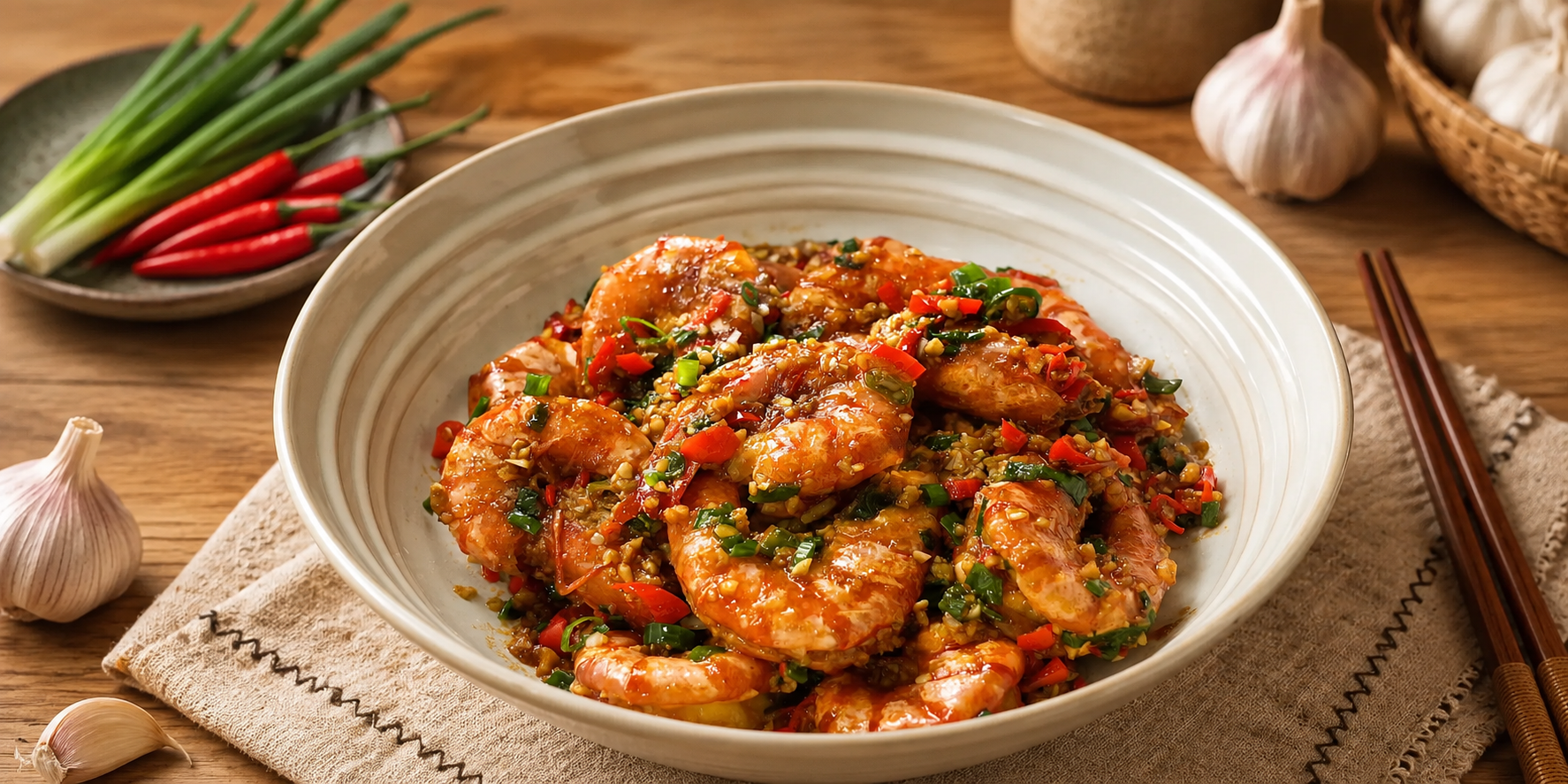
In Garlic Oil-Braised Prawns, garlic supports the natural sweetness of the prawns while adding depth to the cooking liquid. The prawns are usually cooked with oil and seasonings until glossy and well coated.
Here, garlic is not merely sprinkled on top. It becomes part of the sauce, absorbing the prawns’ juices while flavoring the oil. Brief simmering softens its harshness and creates a savory, aromatic coating. The dish demonstrates an important principle of Chinese cooking: seafood does not always require heavy seasoning, but a carefully controlled aromatic base can make its freshness more pronounced.
Garlic Sauce
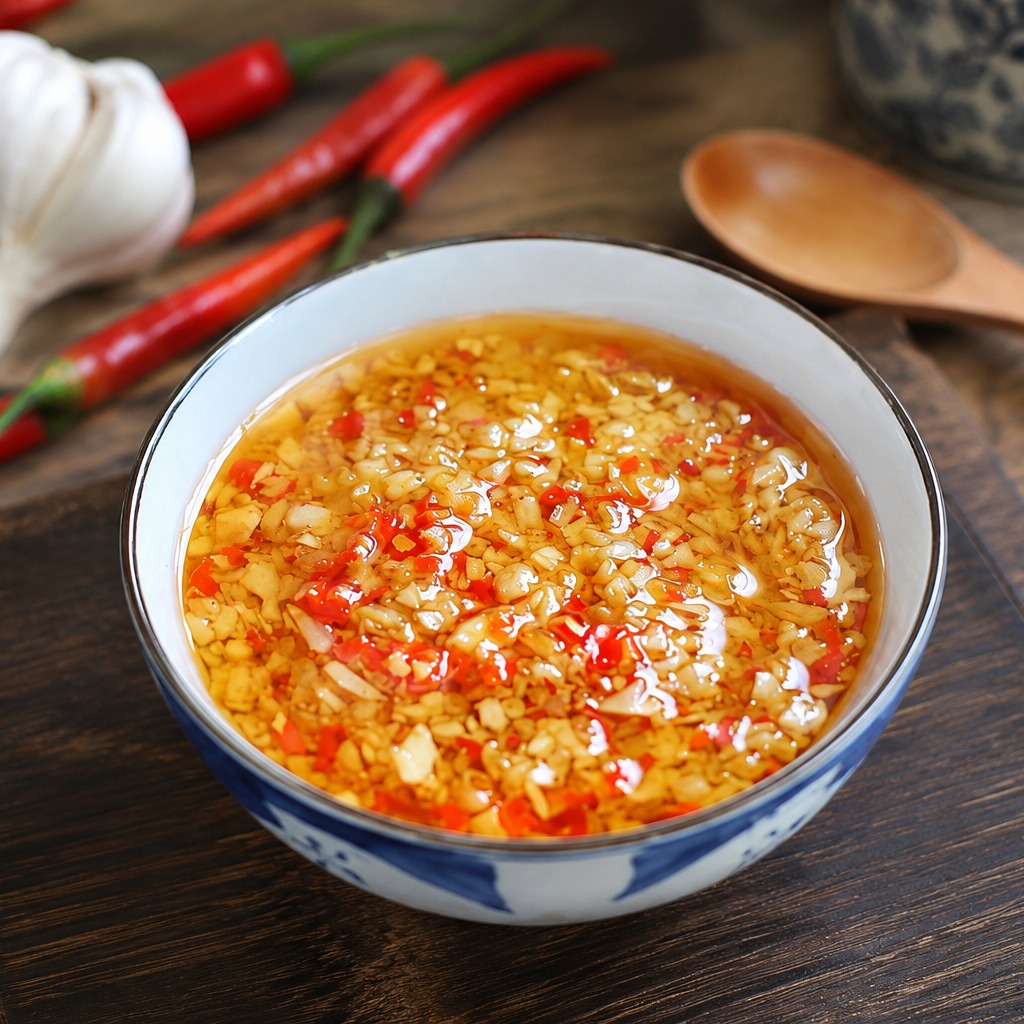
Garlic Sauce represents garlic in its most concentrated and adaptable form. Mincing creates a large exposed surface area, allowing its aroma to spread quickly through hot oil. The cook must manage the temperature carefully: the goal is to release the fragrance and soften the raw pungency without scorching the garlic.
The sauce can also be divided during cooking. Some garlic may be gently fried for sweetness and depth, while another portion is added later to preserve a fresher aroma. This creates several layers of garlic flavor from the same ingredient.
Garlic-Baked Oysters
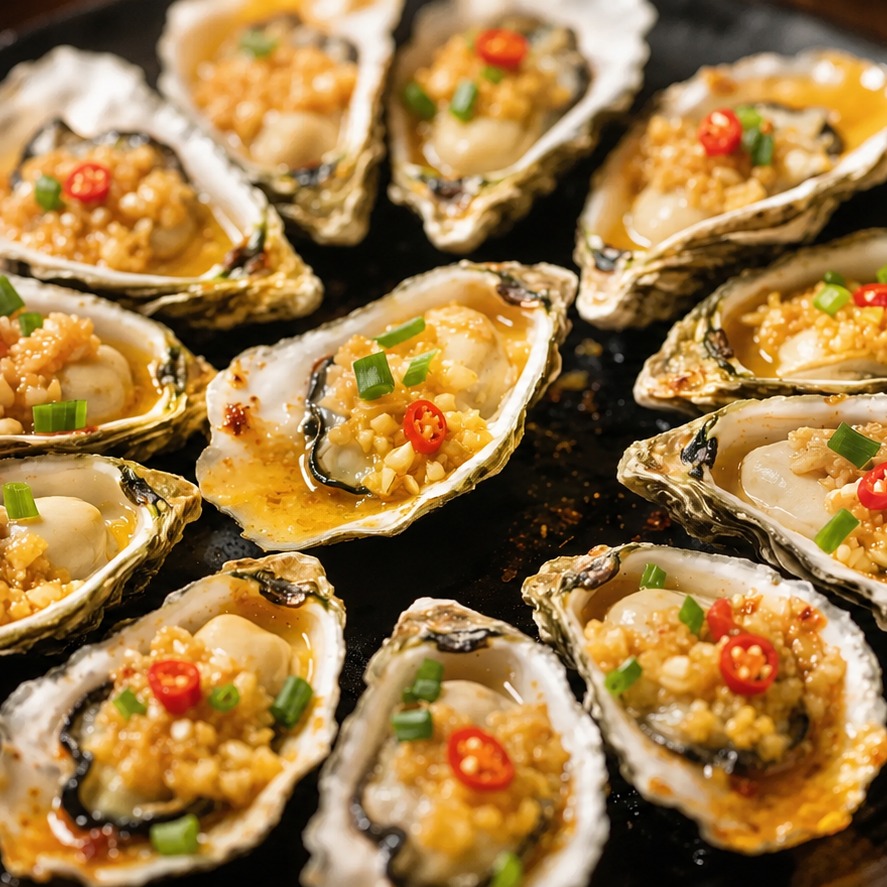
Garlic-Baked Oysters combine plump oysters with a generous layer of seasoned minced garlic. The oysters remain in the deeper halves of their shells, which hold their natural juices as well as the garlic sauce.
This pairing works because garlic contributes richness and aroma without needing to replace the oyster’s own briny flavor. Baking also makes the dish practical for modern households: several oysters can be cooked at the same time, while their shells serve as natural cooking vessels.
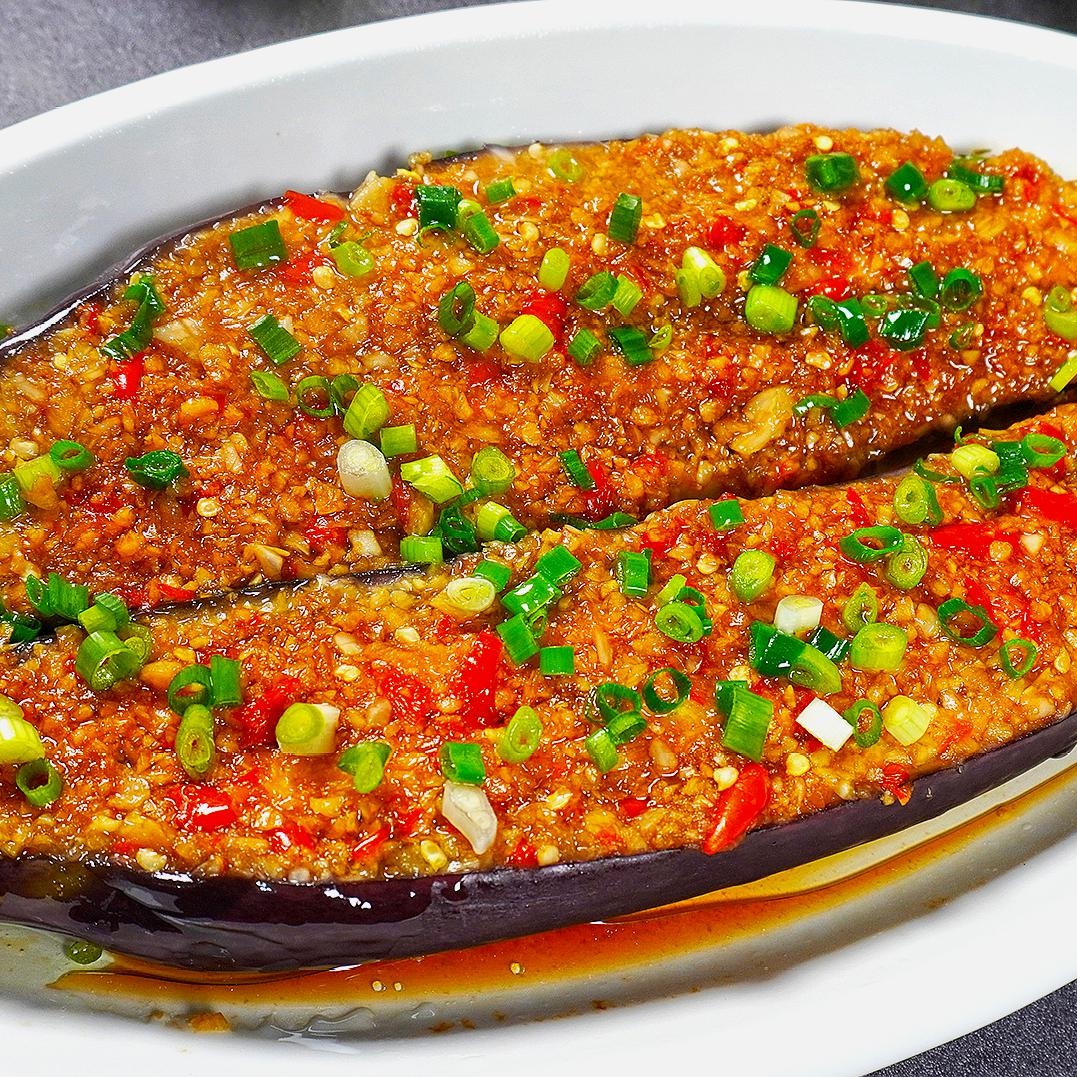
Garlic-Baked Eggplant
In Garlic-Baked Eggplant, garlic interacts with a completely different texture. Once baked, eggplant becomes soft and highly absorbent, allowing garlic sauce to soak into its flesh rather than merely coating the surface.
The dish is closely associated with the flavors of Chinese barbecue stalls, where large eggplants are cooked until tender, opened lengthwise, and covered with garlic and seasonings. In an overseas home kitchen, an oven can reproduce the essential structure of the dish without requiring a charcoal grill. This is a good example of a traditional flavor profile adapting to new equipment while preserving its central character.
From Household Crop to Global Commodity
Garlic’s place in Chinese culture is now visible not only in recipes but also in agricultural statistics. According to FAOSTAT data reported for 2022, the world produced approximately 29.15 million metric tonnes of garlic, of which China produced about 21.34 million tonnes—roughly 73 percent of the global total.
Earlier FAO material shows that this dominance has been sustained for years: in 2008, China produced approximately 77 percent of the world’s 15 million tonnes of garlic. The comparison also illustrates how global garlic production expanded substantially between 2008 and 2022, while China remained the overwhelmingly largest producer.
These numbers reveal how thoroughly garlic has been integrated into Chinese agriculture. What may once have arrived through exchanges with Central Asia eventually became an everyday crop, a major commercial product, and one of the most recognizable foundations of Chinese flavor.
An Ancient Ingredient in a Changing Kitchen
The history of garlic in China is not a story of an ingredient remaining unchanged. Its roles have continually expanded. It moved from an imported crop to a cultivated vegetable, from a medicinal ingredient to a daily seasoning, and from a supporting aromatic to the defining flavor of entire dishes.
Modern recipes such as Garlic Oil-Braised Prawns, Garlic Sauce, Garlic-Baked Oysters, and Garlic-Baked Eggplant show the breadth of this evolution. Some rely on the wok, others on the oven; some cook garlic into a sauce, while others spread it generously across the surface of seafood or vegetables.
What connects them is a distinctly Chinese understanding of garlic: its strength should not simply be maximized, but controlled. Chopped, crushed, fried, simmered, or baked, garlic changes according to technique. That ability to transform—from sharp and pungent to mellow and savory—is precisely what has allowed it to remain essential to Chinese cooking for more than two millennia.
Comments
0 comments
Loading comments...